

Bitcoin large transactions waiting for a block
Which big Bitcoin moves are waiting for a block?
Every payment of 1 Bitcoin or more, from the moment it joins the queue to the block that takes it.
The tape
Waiting for the first payments to arrive. This table fills in as soon as the feed answers.
How to read this
Each row is one Bitcoin payment of 1 coin or more that is still waiting for a block, or recently got one.
Coins moved
The coins that really changed hands. A payment often sends part of its coins back to the sender as change, so the amount going in can be larger than the amount moved.
Coins last moved
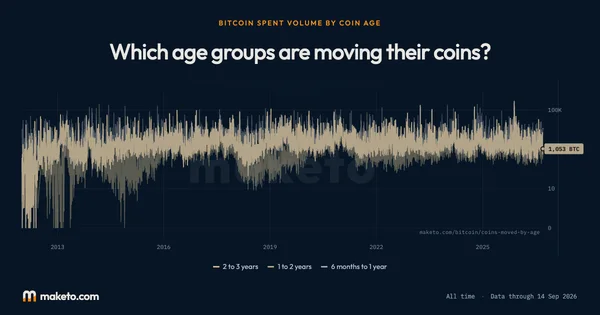
How long the spent coins had been sitting still, averaged by size. Coins that sat for a year or more are the ones that rarely move, so a payment made of them stands out.
Against what was paid
Today's price compared with the average price the spent coins were last bought at. Worth 2.00x what was paid means those coins have doubled since their owner got them.
Block
Which block is expected to take the payment, and for one already in a block, how long before that we saw it. A dropped payment left the queue without being mined.
Understanding
Bitcoin large transactions in the mempool
What is this list?
Every Bitcoin payment first sits in a public queue called the mempool, the waiting room, until a miner puts it into a block. This page lists the payments in that queue that move 1 Bitcoin or more, newest first. It is a record of what is waiting, not a view into anyone's intentions: a payment can be a person moving savings, an exchange shuffling its own wallets, or a company paying a supplier.
How are old coins counted?
Each coin spent carries the date it last moved. A payment's age is the average of those dates weighted by size, and the bands (155 days, a year, five years) count how much of the payment sat still that long. 155 days is where Bitcoin tradition starts to call a holder long-term.
What does against what was paid mean?
Every coin has a price at which it last moved. Maketo compares that price with today's price for each coin spent and averages the result by size. It says nothing about the owner's real cost, which only they know, and it is not a statement about whether they will keep or sell.
Why do some payments never get a block?
A sender can replace a waiting payment with a new one that pays a higher fee, or the queue can drop one that waited too long. Either way the original leaves the list as dropped. The payment is not lost: its coins stay where they were.
Keep exploring
Source: Maketo’s own watch on Bitcoin’s waiting room, with prices from large exchanges.